
How AI Can Match Your Print Job to the Right Print Supplier
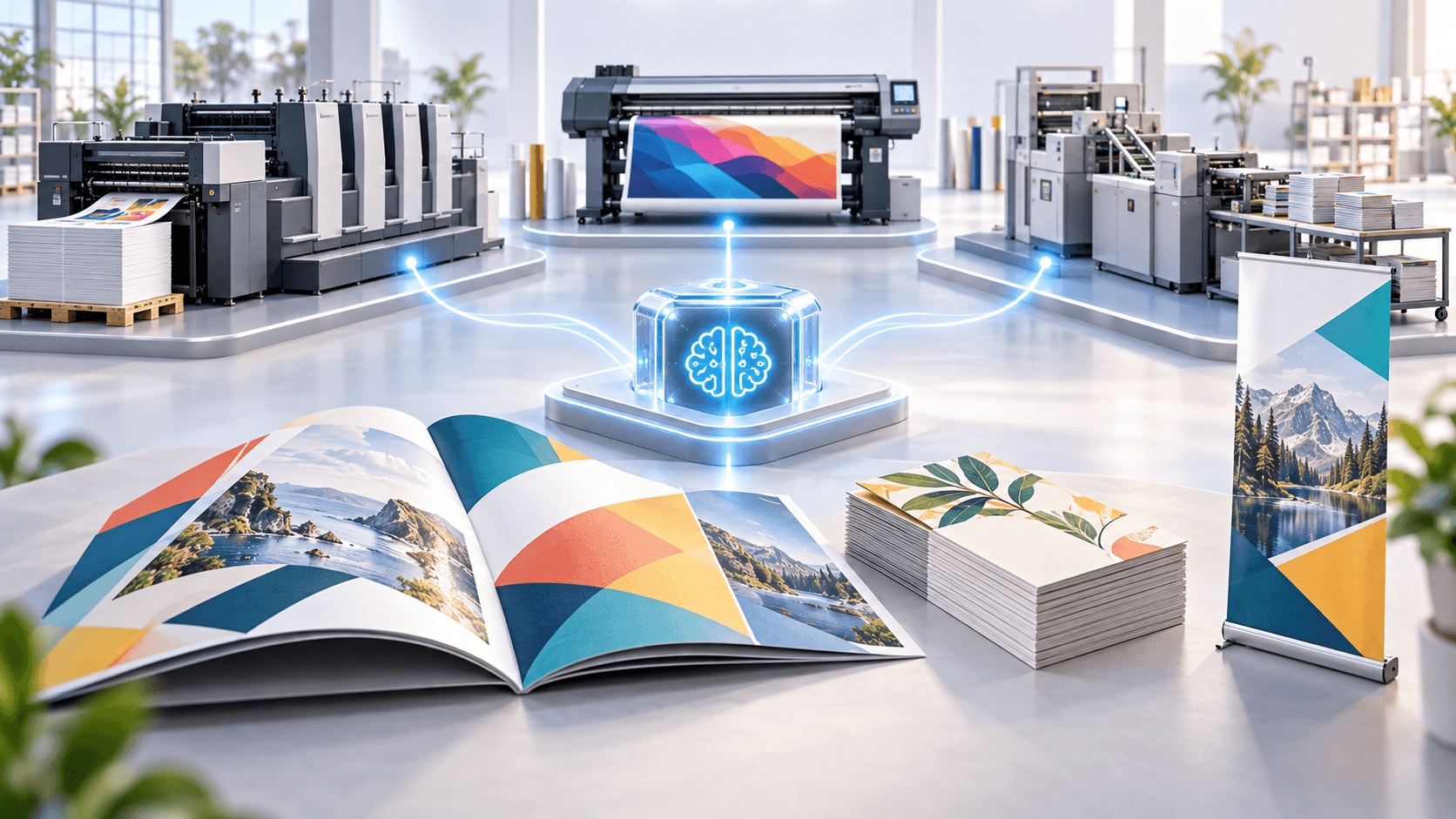
AI can help match your print job to the right print supplier by using your job specification to identify printers with suitable production capabilities. The aim is to find suppliers equipped to produce what you need, then help you compare their quotes before placing an order.
For businesses buying print, this makes the specification the starting point. A brochure, an outdoor banner and a wedding invitation have different production requirements, even when they belong to the same project.
PrintFetch is an AI-driven print supply finder that matches print requirements with suitable UK suppliers. Customers submit their job details, receive quotes and choose a supplier using criteria such as price, delivery and supplier ratings.
Why does choosing the right print supplier matter?
The right print supplier needs the capabilities to produce your particular job. A printer that suits one order may not be the most suitable choice for the next.
Consider brochure printing. Quantity, page count, paper choice and binding all influence how a brochure needs to be manufactured. A short run of stapled brochures presents a different production requirement from a large order of catalogues with a glued spine.
Finishing is the final stage of the printing process, where additional touches such as folding, binding or protective coatings are added to complete the product.
These requirements need to be included when assessing whether a supplier can handle the whole job.
Choosing a printer therefore starts with a practical question: can this supplier produce the required specification, to the agreed standard and deadline?
How does AI print supplier matching work?
AI print supplier matching connects the requirements of a job with relevant supplier capabilities. For the buyer, the process has three main stages: describe the job, receive suitable supplier options and assess the quotes.
1. Define what needs to be printed
A useful print specification describes the finished product clearly enough for a supplier to quote for it.
“We need brochures for an event” leaves several questions unanswered. The printer still needs to understand the quantity, finished size, number of pages, paper, binding and delivery requirements.
Clear information gives the matching process a more useful starting point. If a detail is undecided, identify it as a question for the supplier instead of leaving it open to assumption.
2. Match the specification with suitable suppliers
PrintFetch uses AI to match the submitted requirement with suppliers suited to producing it. The purpose is to connect the job with relevant production capabilities before the buyer chooses a printer.
Different products illustrate why that matters. For banner printing, dimensions, material and finishing are central requirements. Buyers should explain where the banner will be displayed and how it will be fitted, so suppliers can assess the proposed specification.
Supplier matching helps establish relevant options. The quotation stage is where you should confirm the exact materials, scope and delivery commitment.
3. Compare quotes and choose your supplier
Once quotes arrive, compare what each supplier is offering against the original brief.
Check whether the quoted product matches your requirements, whether the delivery date is suitable and whether the full cost is clear. A lower price is only useful if the quote includes everything the job needs.
You remain responsible for the final choice, including approving the specification and agreeing the order details.
What information should a print job specification include?
A good print brief covers the product, quantity, dimensions, materials, finishing and delivery requirements. Use the following checklist before requesting quotes.
| Detail | What to provide |
| Product and purpose | What you need and how it will be used |
| Quantity | Total copies and quantities for each design or version |
| Finished dimensions | The final size, including whether the item folds |
| Pages and printed sides | Page count for a booklet or brochure; single- or double-sided printing for individual sheets |
| Material | Your chosen paper, card or other material, or a request for advice |
| Colour requirements | Full colour, black only or specific brand colour requirements |
| Finishing | Folding, binding, lamination or other required treatments |
| Artwork | Whether files are ready and whether artwork support is required |
| Delivery | Required arrival date, delivery location and any split deliveries |
| Additional items | Envelopes, inserts, packing or other items that belong to the order |
Mark essential requirements clearly. If you are open to alternatives, ask suppliers to show those separately so the original quotes remain comparable.
A practical example: sourcing print for a business event
Imagine a business preparing an event that needs brochures, invitations and a display banner. This is an illustrative brief, rather than a customer case study.
The brochures need a confirmed page count, paper and binding. The printed invitations need a finished size, card choice and a decision about accompanying envelopes. The banner needs dimensions, a suitable material and finishing that works with its intended display.
These are three distinct production requirements. A useful sourcing process assesses each one, while keeping the overall event deadline in view.
The buyer can make the project easier to quote by listing each product separately and explaining which design elements must remain consistent. If products are quoted by different suppliers, the buyer should also agree how colour expectations, proofs and delivery dates will be coordinated.
How can AI-assisted sourcing support print management?
Print management involves organising a print project from the initial brief through production and delivery. Supplier sourcing is one part of that work.
AI-assisted print procurement can help buyers focus their enquiries on suppliers relevant to the job. It also encourages a repeatable approach: prepare a clear specification, assess suitable options and compare quotations against the same requirements.
For a marketing team, that creates a useful record of what was requested and agreed. Keep the final specification, approved artwork, quotation and delivery details together so colleagues can check the order or prepare a future reprint.
The wider project still needs someone to manage approvals, resolve questions and confirm deadlines. Matching is most useful when it supports that organised buying process.
What should you check before placing a print order?
Before accepting a quotation, confirm these five points:
- Specification: Does it include the agreed quantity, size, material and finishing?
- Total cost: Are delivery, artwork work, proofs and any applicable VAT clearly addressed?
- Arrival date: Is the supplier confirming delivery by your deadline, and when must artwork be approved?
- Proofing: What proof will you receive and what are you expected to check before approval?
- Changes: What happens if you amend the artwork, quantity or specification after accepting the quote?
A proof is a version supplied for checking before production. Ask what the proposed proof can demonstrate, particularly if colour or material appearance is important to the order.
Frequently asked questions
Is AI print matching the same as AI-generated print design?
No. Print supplier matching concerns who can manufacture a job. AI-generated design concerns creating visual content. Your print order still needs suitable artwork, whether you prepare it yourself or arrange design support.
Can AI matching guarantee the cheapest printing quote?
No. Matching helps identify relevant suppliers, but it does not establish that a quote is the lowest available across the market. Compare equivalent specifications and the full order cost before deciding.
What if I do not know which paper or finish to choose?
Explain how the printed item will be used, the appearance you want and any budget constraints. Ask suppliers to recommend options and state their assumptions. Agree the final material and finish before placing the order.
Should I check a repeat print order again?
Yes. Confirm that the artwork, specification, price and delivery arrangements still meet your needs. A previous order is a useful reference, but any changes should be reflected in the new quotation and approval.
Find a print supplier suited to your next job
Start with a clear brief covering what you need, how it will be used and when it must arrive.
Submit your print requirements to PrintFetch to find suitable UK print suppliers, compare the quotes you receive and choose an option that fits your project.